
Faith Beyond Fear: Prahlada and the Temple of Ahobilam
11/2/2025
Diving into certain aspects of the Puranas is always a special experience, and this is one such instance. The feeling of divinity blossoms with every word that you read and every hymn that you sing. The melodious harmony of being in touch with God shows you the beauty in every little aspect of life. The more I explore our rich cultural heritage, the more I am captivated by the sheer elegance and depth of the concept of divinity within Sanatana Dharma.
Bammera Potana, the great Telugu poet, beautifully illustrates this connection in his portrayal of Prahalada’s unwavering devotion to Lord Vishnu. In response to (his father) Hiranyakasyapa’s demands, Prahalada delivers a series of rhetorical questions to highlight the unyielding nature of his faith.
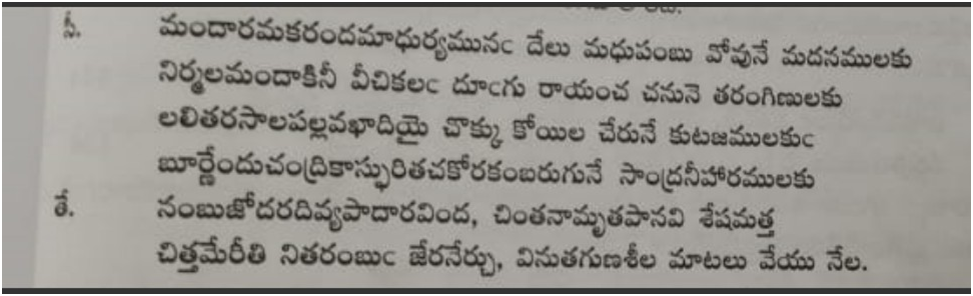
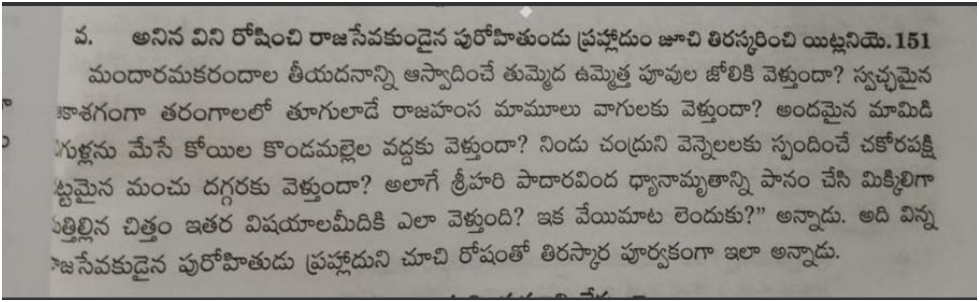
Mandara makaranda madhuryamunadelu madhupambu vovune madnamulaku Nirmala mandakini veechikala tuugu rayancha chanune tharanginulaku Lalitha rasala pallava khadiyai chokku koyila cherune kutajamulaku Boornendu chandrika spuritha chakora marugune sandhraneeharamulaku. Ambujodara divya paadaaravinda chintanaamrutaapaanaviseshamattachithamerithinitarambu cheranerchu Vinuta gunasheela maatalu veyunela
He asks: “ Just as bees are drawn to fragrant flowers filled with sweet honey and steer clear of the grass flowers which are void of what they desire the most, why would I abandon the nectar of devotion to Lord Vishnu? Like royal swans that prefer the clear waters of holy rivers and not the murky rivulets, why would I forsake the divine for worldly pursuits?
As the melodious Koyila bird chooses freshly blooming mango trees over the old trees on the mountainside, why would I abandon the divine for something trivial and mundane ?
Even the chakora bird, which is considered to be the partridge, is captivated by the moon and it’s said to be feasting on the moon rays but not the snow despite their similar appearance and just like the bird, why would I forsake the divine for anything else? My heart is so accustomed and closely entwined with worshipping Lord Vishnu’s feet. Why would it want to go anywhere else leaving the happiest place it is in? Oh, Father, I request you to not talk anything against that.”
Look at how beautifully he puts forth his love towards Vishnu. It is said that even from his childhood he’s been so involved with the divine much to the displeasure of his father, Hiranyakashipu, who never approved of Prahlada’s worship of Lord Vishnu. Prahalada stood firm in the face of threat against his own life even at such a young age and never stopped worshipping whom his heart desired.
From childhood, Prahlada’s devotion to Vishnu was unwavering, much to the dismay of his father, Hiranyakashipu, who saw himself as the supreme being. Despite threats, punishments, and even attempts on his life, Prahlada stood firm, his faith unshaken. This steadfast devotion culminated in one of the most pivotal moments in the puranas : the incarnation of Narasimha.
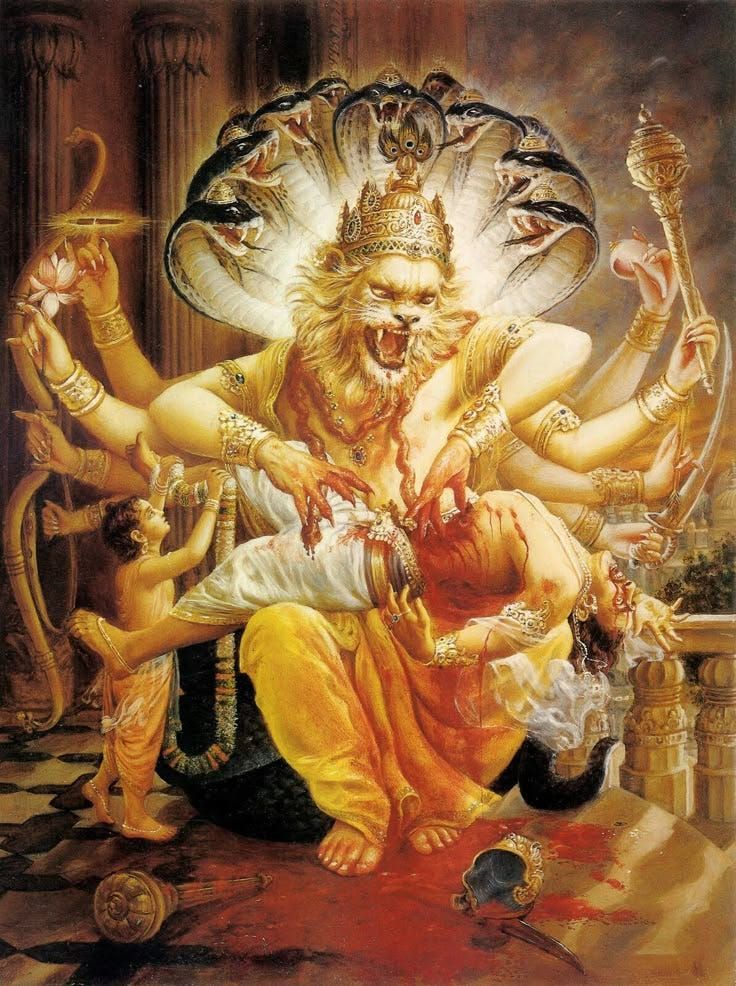
When Hiranyakashipu challenged Prahlada to prove Vishnu’s presence, pointing to a pillar and mocking, “Is your Vishnu here?” Prahlada confidently affirmed it. At that moment, the pillar burst open, and Lord Vishnu emerged in his fearsome Narasimha form — half-man, half-lion — to protect his devotee and destroy the tyrant. Everyone “knows” about the Ugra Roopam of Narasimha Swami, the terrifying form with nails which were very long and as sharp as a diamond and with tusks sharper than razors. Yet, this form was born out of pure love for Prahlada, a fierce response to the torment inflicted on his innocent devotee. Narasimha swaroopam, though terrifying, emerged out of pure love for his bhakta.
Even after the gruesome death of Hiranyakasyapa, Swami still remained angry. All the gods were terrified to approach Narasimha Swami and collectively requested Goddess Lakshmi to calm him. When this did not succeed, Prahalada was tasked to do the same. With a beaming smile and eyes shining with unshed tears of happiness, Bhaktha Prahalada sang a hymn, praising Lord Vishnu to the fullest. Though it took time for the calm to settle, finally everything was reverted back to normal. This might seem like a story, to some. Like one of those moral fables but to those of us who believe ? It’s our sacred history.
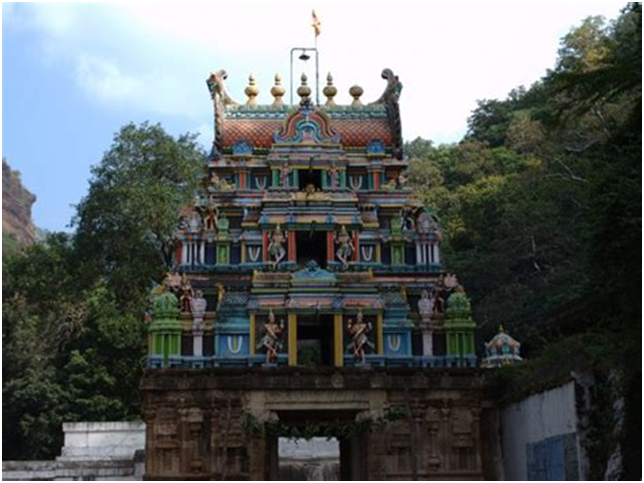
As a solid proof of this historic event, there is a temple, Ahobilam, in the depths of Nallamalla forests in Andhra Pradesh. There are two sub temples there as such. The temple of Ahobilam, nestled deep within the lush, serene Nallamala forests in Andhra Pradesh, is more than just a place of worship — it is a living testament to the divine event of Narasimha’s incarnation — the half-man, half-lion avatar. This sacred site is believed to be the very place where Lord Vishnu, in his fierce Narasimha form, emerged from the pillar to protect his beloved devotee, Prahlada, and to vanquish the tyrannical Hiranyakasyapa.
The temple complex, spread across the hills and valleys of the forest, is divided into two main parts: Lower Ahobilam and Upper Ahobilam, each housing several shrines dedicated to different forms of Narasimha. These forms, known as the Nava Narasimhas (the nine Narasimhas), represent various aspects of the deity’s divine power and compassion. Pilgrims who visit Ahobilam often undertake a challenging trek through the dense forests and rugged terrain, not just as a physical journey but as a spiritual one, retracing the steps of Prahlada’s unwavering faith and the Divine’s miraculous intervention.
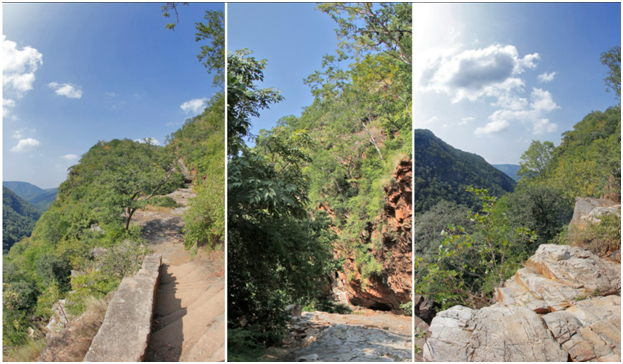
For devotees, Ahobilam is not merely a historical or mythological site — it is a place where the past and present merge, where the divine energy of Narasimha is believed to still reside. The temple’s atmosphere is charged with a sense of reverence and awe, as if the very rocks and trees whisper the story of Prahlada’s devotion and Narasimha’s boundless love. The rituals, hymns, and prayers offered here are not just acts of worship but a continuation of a timeless bond between the Divine and his devotees. The annual festivals, especially during Narasimha Jayanti, transform the temple into a vibrant hub of devotion, with thousands of devotees gathering to celebrate the triumph of faith over arrogance and evil.
The story of Narasimha is not just a tale of divine intervention; it is a powerful reminder of the boundless love and protection the Divine offers to those who worship him with unwavering faith. And Ahobilam stands as a physical embodiment of this eternal truth. The temple is uniquely divided into two parts: Lower Ahobilam and Upper Ahobilam, each housing a series of shrines dedicated to the Nava Narasimhas — the nine forms of Narasimha. These forms, such as Jwala Narasimha (the fiery form), Ugra Narasimha (the fierce form), and Malola Narasimha (the gentle, loving form), represent the multifaceted nature of the Divine, showcasing both his terrifying power and his infinite compassion.
Each shrine is nestled in the rugged terrain of the forest, requiring devotees to undertake a challenging trek through dense foliage, steep hills, and rocky paths. This journey is not just a physical endeavor but a spiritual pilgrimage, symbolizing the trials and tribulations one must endure to reach the Divine. The act of walking through the forest, surrounded by the sounds of nature and the whispers of ancient legends, evokes a sense of stepping back in time, as if one is retracing the footsteps of Prahlada himself, who stood firm in his devotion despite the gravest dangers. The Upper Ahobilam, located on a hill, is particularly significant as it is believed to be the exact spot where Narasimha appeared from the pillar. The energy here is palpable, as if the very air is charged with the divine presence of Narasimha. Devotees often describe feeling a mix of awe and peace, as though the fierce form of the Lord is both a protector and a comforter.
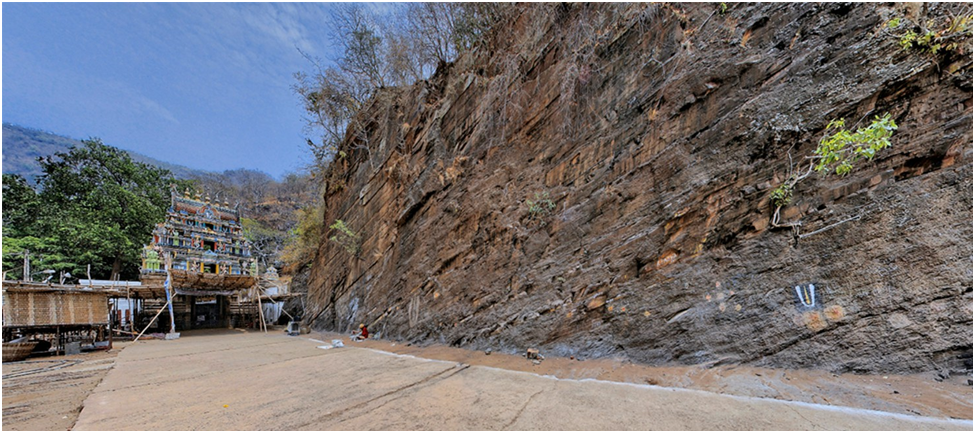
The temple’s architecture, though simple, carries an ancient charm, with its stone carvings and inscriptions telling the story of Narasimha’s incarnation. The rituals performed here, from the daily abhishekam (sacred bathing of the deity) to the chanting of Vedic hymns, are not mere traditions but acts of devotion that keep the divine energy alive.
Ahobilam is also a place of deep spiritual significance during festivals, especially Narasimha Jayanti, which celebrates the manifestation of Narasimha. During this time, the temple comes alive with vibrant processions, devotional singing, and elaborate rituals. Thousands of devotees visit to Ahobilam, braving the difficult terrain to seek the blessings of Narasimha. The atmosphere is electric with devotion, as the chants of “Namo Narasimhaya” echo through the hills, creating a sense of unity among the pilgrims. For many, this pilgrimage is a once-in-a-lifetime experience, a chance to connect with the Divine in a way that transcends the ordinary.
Ahobilam is not just a temple; it is a living, breathing testament to the eternal bond between the Divine and his devotees. For those who believe, this is not just a story from the past — it is a reality that continues to unfold in the hearts of millions. The temple stands as a reminder that the Divine is always present, waiting to protect and uplift those who call upon him with sincerity and faith. It is a place where the fierce and compassionate energy of Narasimha continues to inspire, heal, and guide, offering solace to those in need and strength to those who face adversity.
In essence, Ahobilam is not just a destination; it is a journey — a journey of faith, devotion, and divine connection. It is proof, etched in stone and spirit, that the bond between the Divine and his devotees is eternal, unbreakable, and ever-alive. For those who walk its paths and offer their prayers, Ahobilam is not just a temple — it is a sacred experience, a living history, and a beacon of hope in a world that often feels chaotic and uncertain. I am deeply grateful for having visited Ahobilam when I did, as those experiences connected me to the spiritual world at an early stage in life.
Author: Adhikarla Sahiti, CS24B2019 I have always been an ardent follower of everything related to our history and culture. Travelling to temples like this lls me with a deep sense of peace and helps me establish a profound, meaningful connection to my — and our — roots. By the end of the day, I feel enriched, knowing that the cultural awareness and spiritual grounding I gain from these journeys will stay with me forever. To this day, I strive to visit as many historically signicant temples as I can, each one adding another layer to my understanding of our heritage.