
“Threads, Tastes, Crafts & Traditions: India’s GI Tags Uncovered”
23/8/2026
India is a land defined by its immense cultural richness, where arts, traditions, devotion, and handicrafts flourish in remarkable variety. This diversity is one of the nation’s greatest strengths, with language, customs, and cultural expressions shifting noticeably from one region to another. A traditional Hindi saying — “kos-kos par badale paanee, chaar kos par baanee” — beautifully illustrates this reality: water changes every mile, and language every few miles. Beyond literal meaning, it symbolizes how lifestyles, social practices, belief systems, and people’s interactions with nature evolve across regions.
Such variations deeply influence artistic expression, shaping how communities create, adapt, and interpret their surroundings. India’s regional identity is also reflected in its indigenous products, many of which are closely tied to local heritage and geography. Specialties like Darjeeling tea from Darjeeling and Ratlami sev from Ratlam, Madhya Pradesh, demonstrate how local knowledge, resources, and craftsmanship contribute to distinctive cultural signatures. Together, these elements form a living mosaic that captures the dynamic spirit of India’s diversity.
To safeguard region-specific artifacts and products that carry cultural, historical, and economic significance, the Government of India introduced the Geographical Indications (GI) tagging system in 2003. A GI tag is awarded to goods that are uniquely linked to their place of origin, recognizing the distinct qualities shaped by local tradition, environment, and craftsmanship. This framework supports product branding and wider recognition while also encouraging the preservation of traditional knowledge and heritage practices. In this article written by Vikram, readers will explore twelve regions of the Indian subcontinent through their GI-tagged specialties, gaining insight into how these products reflect India’s diverse cultural legacy. The aim is to deepen appreciation and understanding of the nation’s heritage from this distinctive perspective.
1. Kallakurichi Wood Carving
“This ancient and unique handicraft comes from the Kallakurichi town of Tamil Nadu, India,” and received the “Geographical Indication (GI) tag in 2023.” These wooden carvings are “well known for their exquisite artistry, meticulous craftsmanship, and attention to detail.” Here, artisans work not only for “earning a livelihood” but also for “preserving their traditional methods and designs,” making this craft a living symbol of cultural heritage.
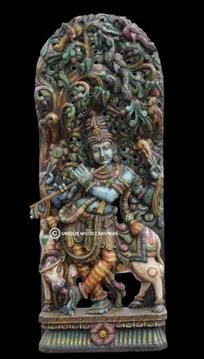
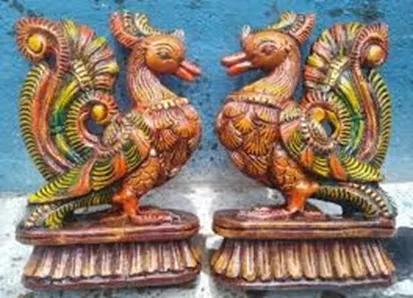
The artisans primarily use “wood from the Indian Coral Tree (Pangara),” valued for its “strength and workability,” along with “non-toxic paints” for safe and vibrant finishes. They rely on “traditional tools like knives, chisels, and gouges,” following a careful process that includes “deciding the size of the idol, selecting the wood, drawing and transferring the design, and finally shaping it with metal tools.” Kallakurichi wood carvers create “decorative panels, furniture, sculptures, and doors,” where “each carved piece tells a unique story of Indian craftsmanship.”
2. Kutch Bandhani
“Kutch Bandhani is one of the oldest heritage textile arts of India,” originally pioneered and preserved by the “Khatri community of Gujarat.” This traditional art form received the “Geographical Indication (GI) tag in 2024,” which helps “protect its originality, preserve traditional knowledge, and ensure authenticity for consumers.” The term “Bandhani” refers to the “traditional tie-and-dye technique” that gives these textiles their distinctive identity.
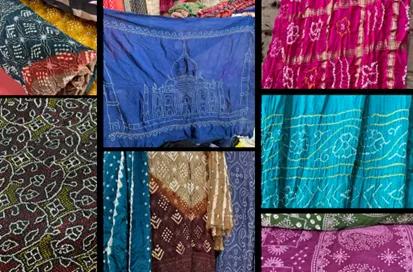
The process begins with “lightweight fabrics such as cotton, silk, or gajji silk,” where patterns are marked using “stencils.” Mainly, “women artisans” tie thousands of tiny sections using fingernails or “small metal rings,” creating knots known as “bheendi,” which act as “resist points during dyeing.” The fabric is dyed “from lighter colours to darker shades,” and the beauty emerges when the knots are opened, forming “intricate dotted, almost three-dimensional patterns.” Bandhani is “deeply connected to the social and cultural life of Gujarat and Rajasthan” and is considered “auspicious.” Colours carry meaning — “red for newly married women” and “yellow for new mothers.” The “gharchola” is essential in “Hindu and Jain weddings,” and Bandhani is worn during “Navratri and Teej.” The craft’s roots trace back “nearly 5,000 years to the Indus Valley Civilization,” with visual evidence in the “6th-century Ajanta Cave paintings.”
3. Sohrai Khovar (Wall Paintings)
“Sohrai and Khovar are two different art forms, created for different occasions by the same communities,” and both are “traditional wall art practices that have received Geographical Indication (GI) tags.” Sohrai painting is a “traditional indigenous art form practiced mainly by women” from tribal communities of the “Hazaribagh region of Jharkhand,” including the “Kurmi, Santal, Munda, Oraon, Agaria, and Ghatwal communities.” These same communities also practice “Khovar art,” highlighting a shared cultural lineage expressed through different occasions.
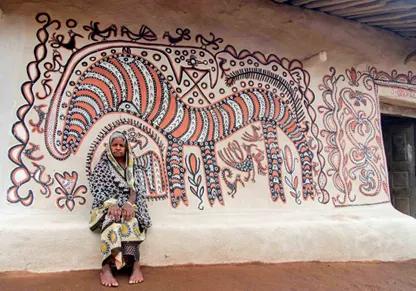
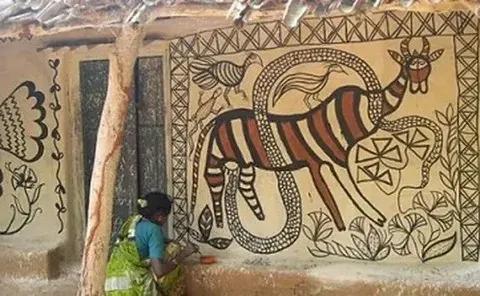
“Sohrai art is closely linked to the Sohrai harvest festival,” celebrated twice a year — “around Diwali” for Kharif harvest and “during Sankranti in January” for Rabi crops — symbolizing “harvest and prosperity.” “Khovar,” in contrast, is “associated with marriages” and represents “fertility and union.” Both art forms are believed to have “evolved from ancient cave art,” with traces found in the “Isko caves.” The meanings of the words reflect their roots — “Soh or Soro means ‘to drive away,’ and Rai means ‘stick,’” while “Kho means cave and Var means a bridal couple.” The art uses “locally sourced natural materials,” with colours derived from “mineral-rich soil, clay, river pebbles, and manganese ochre,” and techniques such as “scraping with four fingers and using broken comb pieces” to create distinctive patterns.
4.Bobbili Veena
“The Bobbili Veena is a unique musical instrument and an important part of India’s musical culture,” known for its “distinctive and deep sound” and invented in the 17th century.” The instrument originates from “Bobbili town, about 55 km from Vizianagaram in Andhra Pradesh,” and has been awarded the “Geographical Indication (GI) tag.” During the “Bobbili reign,” the veena was “mainly played by women” and traditionally crafted by the “Sarawasiddi community of Gollapalli village.” Even today, “the same families continue this art,” keeping the tradition alive.
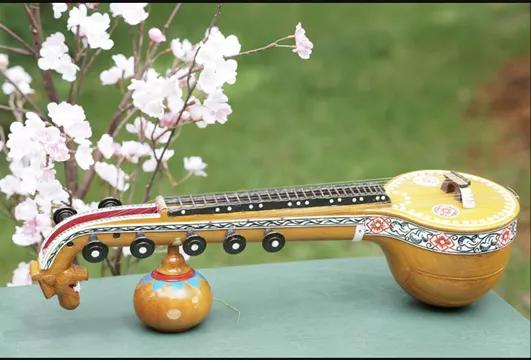
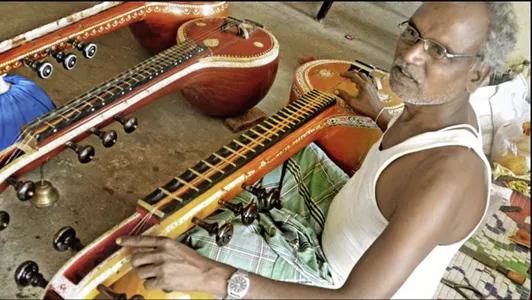
The Bobbili Veena is crafted from “a single piece of jackwood (pansa wood),” and it takes “more than a month” for skilled artisans to complete one instrument. This wood is preferred for being “strong yet lightweight” and for adding “richness to the sound,” while its resistance to moisture helps “maintain the veena’s unique tone.” Today, “miniature Bobbili Veenas” are more commonly produced as “souvenirs,” since learning and handling the original instrument requires “time, space, and effort.” A few artisan families continue making these miniatures using “the same wood and traditional techniques,” supporting their livelihood while “preserving the skill, craftsmanship, and cultural value of the Bobbili Veena.
5.Madurai Malli
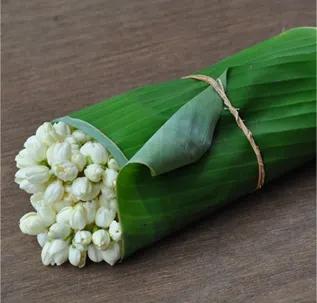
“I have been living in Tamil Nadu for a year and a half,” travelling from Chennai to the Nilgiris and Trichy.” A beautiful constant I observed everywhere is the tradition of women wearing gajras — exquisite white jasmine garlands, often with roses.” Witnessing this “charming custom” made a strong impression on me and led to our next “Geographical Indication (GI) topic” — “Madurai Malli,” a special variety of jasmine cultivated in the areas surrounding Madurai.”
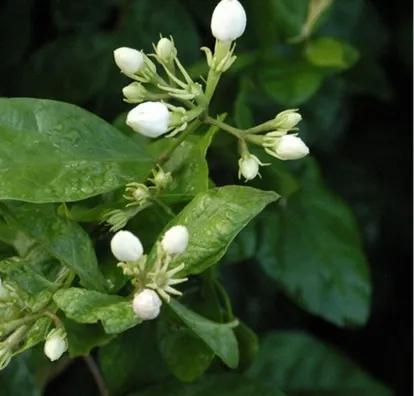
Madurai Malli received its “GI tag status because of its unique fragrance and cultural significance,” which arise frothe “lateritic and red soil rich in sulphur.” This soil helps accumulate “aromatic alkaloids such as Jasmone and alpha terpineol,” giving the flowers a “heavy scent superior to jasmine grown elsewhere.” These flowers have been grown “since 300 BCE,” mentioned in “ancient Tamil literature,” and used in “temples, marriages, and rituals.” The flowers are “handpicked in unopened bud form early in the morning between 3:00 a.m. and 8:00 a.m.” to preserve freshness and fragrance. “Scientifically known as Jasmine Sambac,” Madurai Malli represents “culture, history, and tradition,” and Madurai is rightly known as the “Jasmine Capital of India.”
6. Sundraja Mango
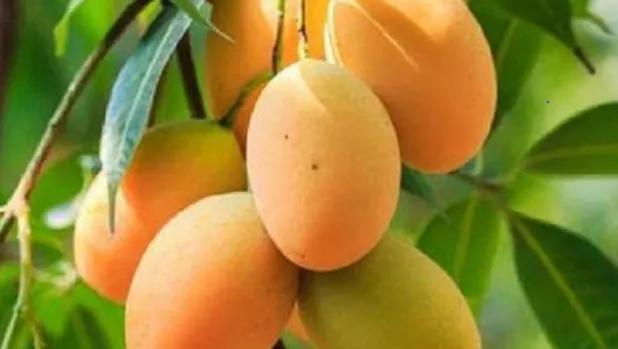
“This special variety of mango received the Geographical Indication (GI) tag in 2023” for its “unique taste and distinct characteristics.” It is primarily grown in the “Rewa district of Madhya Pradesh” and is often called the “royal heritage of the former princely state of Rewa.” This mango was developed through “careful cross-breeding in the orchards of Govindgarh Fort,” with credit given to “Maharaja Venkat Raman Singh.” The name “Sundraja,” meaning “Beautiful Creation,” reflects its “attractive appearance, light colour, and pleasant aroma.”
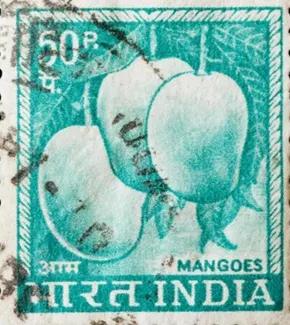
The Sundraja mango is “completely fibre-free” and has a “special sugar profile suitable for diabetics.” It features an “oblong shape, greenish-yellow skin, buttery texture, powerful aroma, and a small seed,” resulting in “more pulp and longer shelf life.” A unique fact is that “this mango is naturally resistant to minor post-harvest spoilage,” making it suitable for transport without heavy chemical treatment. Its popularity grew further when the “Government of India released a postal stamp featuring the Sundraja mango,” recognizing its “agricultural, cultural, and historical importance.”
7. Feni
“The Portuguese introduced cashew trees to Goa in the 1600s,” and over time, the local farming community known as the “Bhatikars” developed a unique method to produce a spirit from cashew apples. This spirit is now recognized as the “Heritage Spirit of Goa.” The tradition of Feni production evolved through a “blend of indigenous Goan knowledge and distillation techniques introduced by the Portuguese,” making it a culturally significant practice.
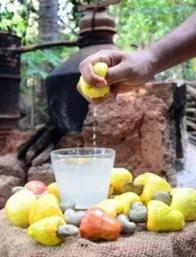
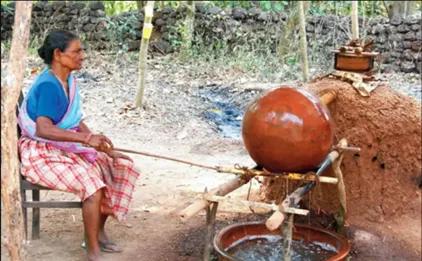
Feni production usually takes place during March and May,” when natural conditions are favourable. Only “fully ripened cashew apples that naturally fall to the ground” are collected, after which the seeds are removed and the juice is extracted manually. The juice is transferred into “earthen pots for natural fermentation lasting 3–4 days,” buried halfway underground to maintain a stable temperature, using “ambient yeast with no artificial products.” After fermentation, the juice undergoes “three stages of distillation.” The first produces “Urrak,” the second yields “Cazulo with 40–42% alcohol,” and the third results in “traditional Goan Feni with an alcohol content of 43–45%.” In recognition of its “traditional craftsmanship and cultural importance,” Goan Feni received the “Geographical Indication (GI) tag in 2009.”
8. Muga Silk
“Muga silk is a rare natural silk variety produced exclusively in the Brahmaputra valley of Assam,” and it is “renowned for its distinct golden sheen and exceptional durability,” which earned it the Geographical Indication (GI) tag. It is traditionally woven by local communities and used to create “mekhela chador, sarees, and ceremonial garments,” making it an inseparable part of Assamese identity.
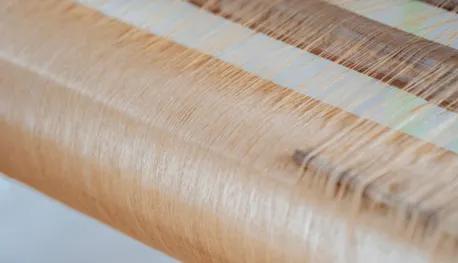
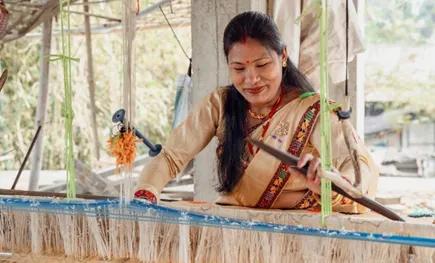
The silk is produced from the “Antheraea assamensis silkworm,” which thrives only in Assam’s unique climate and vegetation. Unlike other silks, “Muga silk does not require artificial dyeing,” as its “natural golden colour deepens with age.” The process involves “indigenous sericulture practices passed down through generations,” linking the fabric to both “ecology and cultural heritage.” Its reputation as the “pride of Assam” reflects how geography and tradition together define its quality and exclusivity.
9. Kolhapuri Chappal
“Kolhapuri Chappal is a traditional handcrafted leather footwear,” recognized with a GI tag for its “distinct style, strength, and craftsmanship.” Originating from the “Kolhapur region of Maharashtra and parts of northern Karnataka,” it reflects a long history of leather artistry practiced by local artisan communities.
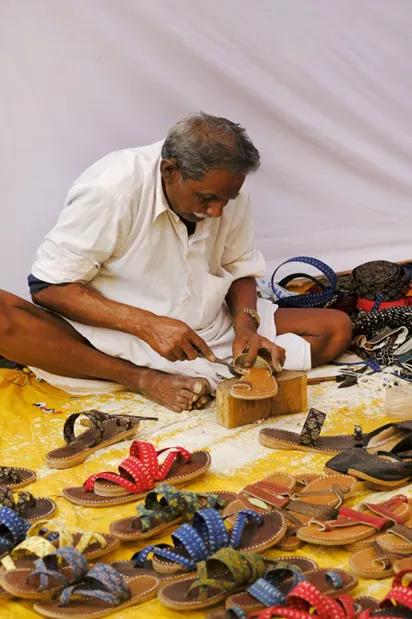
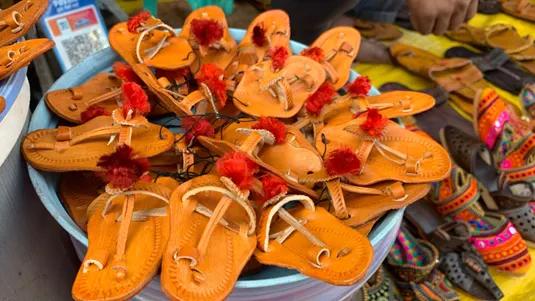
These chappals are made from “vegetable-tanned buffalo or cow leather,” using “manual cutting, stitching, and hammering techniques” without modern machinery. The footwear is known for its “open design, braided straps, and sturdy sole,” making it suitable for India’s climate and terrain. Beyond utility, Kolhapuri Chappal symbolizes “rural craftsmanship and sustainable production,” preserving skills that have survived for centuries and providing livelihoods to thousands of artisans.
10. Tezpur Litchi
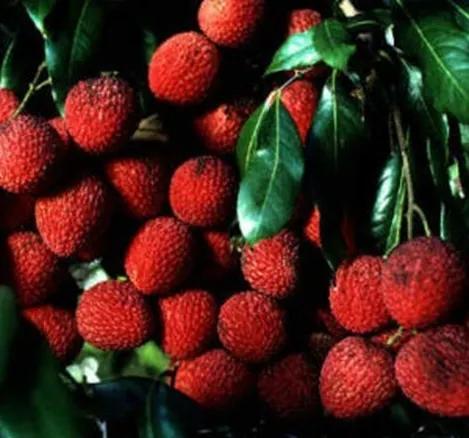
“Tezpur Litchi is a unique variety of litchi grown in the Sonitpur district of Assam,” and it is celebrated for its “exceptional sweetness, bright red skin, and juicy pulp,” which earned it the GI tag. This fruit is closely linked to the “soil composition and climatic conditions of the Tezpur region.”
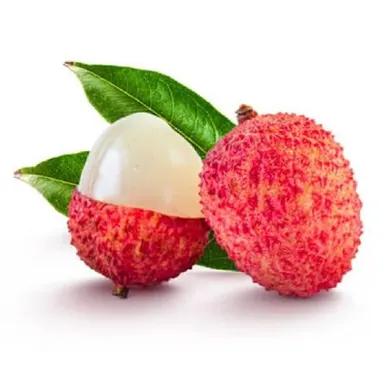
The litchi is known for having “high juice content and tender flesh,” making it popular for both fresh consumption and processing into beverages. Its cultivation depends on “traditional orchard management and seasonal harvesting practices,” ensuring quality and authenticity. The GI recognition has transformed Tezpur Litchi into a “symbol of regional pride and agricultural identity,” strengthening farmer incomes and promoting Assam’s horticultural heritage.
11. Kashmiri Saffron
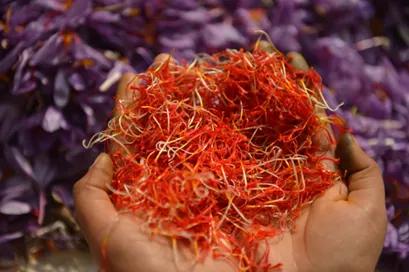
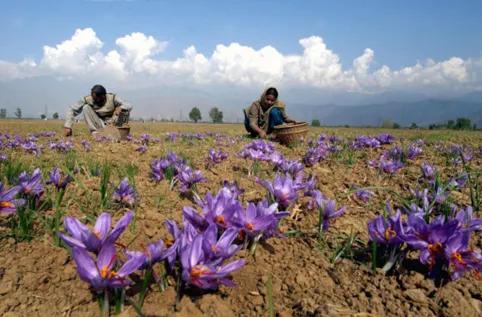
“Kashmiri Saffron, grown mainly in the Pampore region of Jammu and Kashmir,” is famous for its “deep crimson colour, strong aroma, and high crocin content,” which distinguishes it from all other saffron varieties. It holds a GI tag because its “quality is directly shaped by the region’s altitude, climate, and soil.”
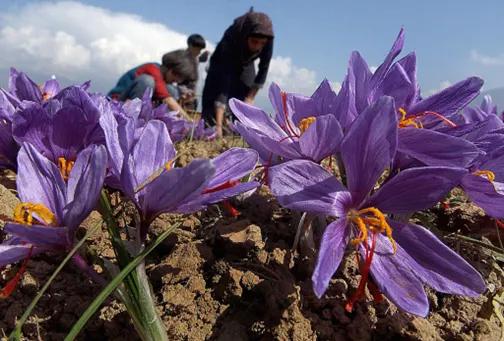
Saffron cultivation involves “hand-picking delicate flowers and carefully separating the stigmas,” making it one of the most labour-intensive crops in the world. Historically described as “red gold,” it has been part of Kashmir’s economy and culture for centuries. The spice represents “luxury, tradition, and medicinal value,” and its GI status safeguards it from imitation while preserving a centuries-old agricultural practice.
12. Idu Mishmi Textiles
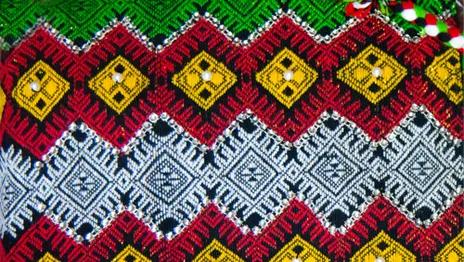
“Idu Mishmi Textiles are traditional handwoven fabrics produced by the Idu Mishmi tribe of Arunachal Pradesh,” and they are recognized as GI-tagged products for their “distinct patterns, natural dyes, and symbolic motifs.” These textiles are deeply connected to the tribe’s “rituals, social customs, and identity.”
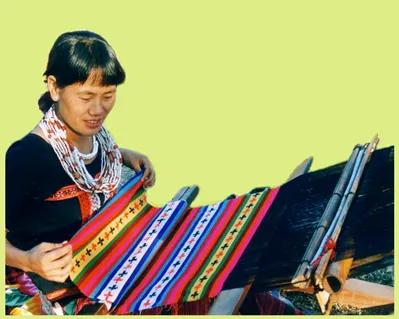
The fabrics are woven using “locally sourced cotton and plant-based dyes,” with motifs representing “nature, animals, and ancestral beliefs.” Every garment reflects “tribal knowledge and spiritual meaning,” passed down orally and through practice. The GI tag acknowledges Idu Mishmi textiles as a “living heritage of Northeast India,” preserving indigenous craftsmanship while supporting sustainable cultural livelihoods.
In Conclusion,
Geographical Indication (GI) tagged products are not merely labels of origin; they are stories of people, places, and traditions woven into tangible forms. Each product discussed in this article — from the intricate Kallakurichi wood carvings and vibrant Kutch Bandhani to the aromatic Madurai Malli and precious Kashmiri Saffron — reveals how geography, climate, and community knowledge together shape India’s cultural identity. These products stand as living examples of how art, agriculture, and craftsmanship evolve from the daily lives and beliefs of local communities, carrying forward centuries of inherited wisdom.
Through GI tags, India safeguards its indigenous knowledge systems, artisanal skills, and regional pride from being lost to imitation or modernization without roots. More importantly, these tags empower farmers and artisans by giving their work recognition, economic value, and global visibility. In exploring these twelve GI-tagged treasures, we discover not just objects or produce, but a deeper narrative of unity in diversity, where every region contributes a unique voice to the cultural symphony of the nation. Thus, GI tags serve as bridges between the past and the future — preserving heritage while enabling sustainable growth — ensuring that India’s traditions continue to thrive in a rapidly changing world.
From the Writer: Vikram Singh (ME24B2047)
Hello readers, this is Vikram Singh, a second-year Smart Manufacturing student. I have always been eager to learn about Indian history, diversity, and culture, and I am deeply curious about the traditions and art forms that have been preserved and passed down through generations. Learning about these cultural elements has been a source of inspiration for me, and through writing, I wish to share my understanding and appreciation with others. This article is a small effort to inform readers and spread a little knowledge about our rich traditions and heritage, and I look forward to continuing this journey of learning and expression.